

6th October World Cerebral Palsy Day Special
February 20, 2026
From Exclusion to INNOVATION
February 20, 2026
GST 2.0 || MAKING SENSE OF GST : AN EXPERT SPEAKS
The multiple slabs are more beneficial for the Government’s collection rather than the tax payer. The RCM (Reverse charge mechanism), TDS (Tax deducted at source), and TCS (Tax collected at source) are also deducted, which adds more pressure and also confusion on the whole process. Even professionals find it difficult to file the tax and understand the changes.
Now, eight years later, the Government has removed taxes on Medical Insurance, Life Insurance but the Government will cut 18% GST. From the 22nd onwards, GST will be removed but the insurance company has already stopped the premium one month prior to this. No benefit for anybody, rather just a vote collection process. There is no burden on the rich class, the middle class will have to share this pressure.
Reducing the prices of cars with 1200 cc engines, but let’s be realistic who buys such cars in the times of SUV’s. Filing the returns is time consuming. Government Portals are never functioning smoothly, then new changes are introduced every month. This brings more confusion. The officers themselves do not know what the new changes are. We get an automated response.
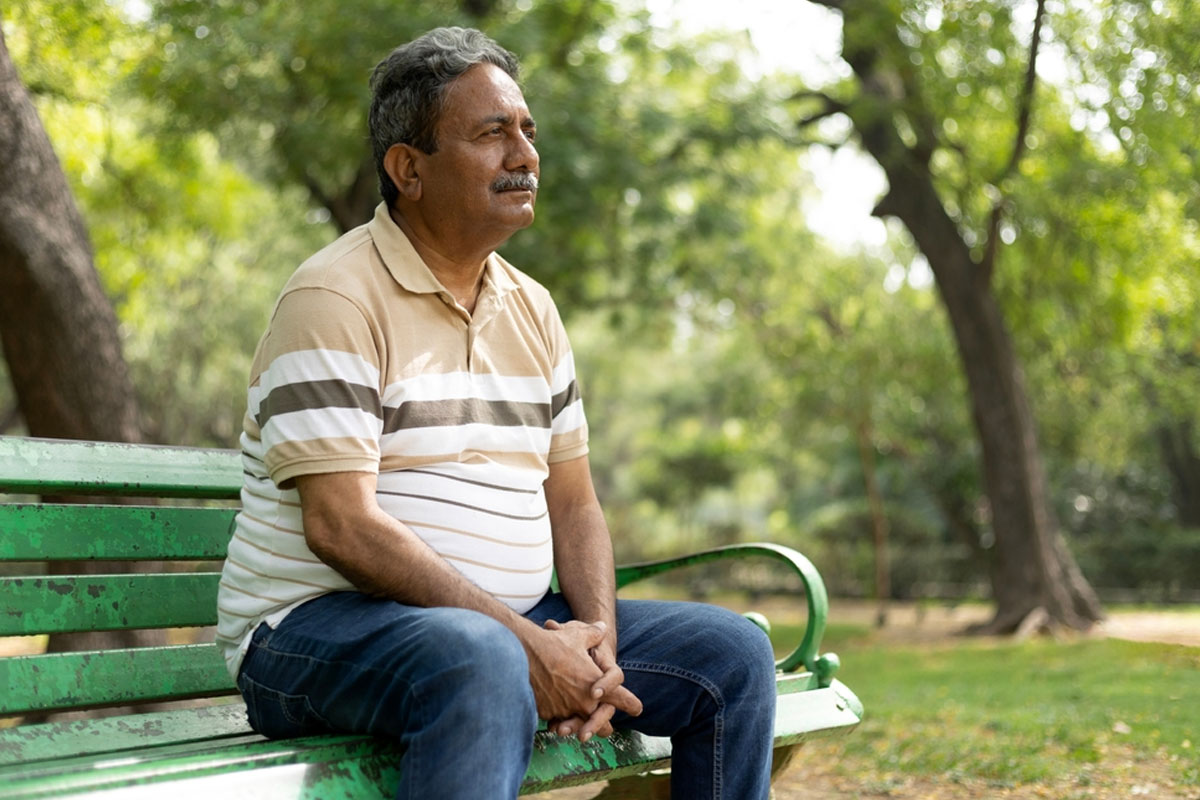
GST Expert and CA Raj Kumar shares his views on GST with Bhanu Malik
On the 11th of every month, the record of the sale is filed and on the 13th, the quarterly is filed. Even if it’s late by a day due to the portal, the Government serves the notice. No benefit of GST for the Government either. On 30th December, ITC is claimed and notice comes after a year that there is a mismatch, causing mental harassment and leading to a total waste of time.
People having MSME registrations, too, feel a lack of clarity. There are missing links in the implementation of GST and either the Government does not listen or is not informed properly.
HOUSEHOLD ESSENTIALS
18% → 5%
India’s Fiscal Gamble
A ₹4.8 lakh crore revenue sacrifice, a middle-class windfall, and lingering questions of fairness—can this rebranding rescue the credibility of India’s biggest economic reform?
When the Goods and Services Tax (GST) was launched in 2017, it was pitched as “one nation, one tax”—a grand promise to simplify India’s fragmented tax system. What followed was elegant: multiple slabs, compliance headaches, and widespread frustration among traders. For many, GST became a symbol of reform gone wrong.
Now, eight years later, GST 2.0 arrives as both reform and rebranding—an effort to rebuild public trust in one of India’s most controversial economic experiments.
₹4.8 LAKH CRORE GAMBLE
THE NEW TAX PLAYBOOK
The overhaul reduces four major slabs—5%, 12%, 18%, and 28%—to two: 5% and 18%. A new 40% “luxury and sin” bracket captures high-end cars, tobacco, and premium goods.
• Essentials like soaps, toothpaste, and shampoos are now taxed at 5%, down from 12–18%.
• Small cars, appliances, and cement have dropped from 28% to 18%.
• Life and health insurance are exempt.
• Electric vehicles remain at 5% to sustain green adoption.
On paper, the reforms mean cheaper groceries, lighter insurance premiums, and more affordable cars. The Finance Ministry has acknowledged a revenue sacrifice of nearly ₹4.8 lakh crore but insists higher consumption will offset it. Economists at SBI Research predict inflation could dip by about one percentage point, offering both economic relief and political comfort.
WHO WINS, WHO DOESN’T
The middle class emerges as the clear beneficiary. Lower GST on consumer durables and tax-free insurance premiums translate into savings in the thousands. “For the urban middle-income household, this is direct relief that boosts disposable income,” says Madan Sabnavis, Chief Economist at Bank of Baroda.
For the working poor, the gains are far smaller. Cheaper toothpaste or soap may cut spending by ₹50–100 a month—barely noticeable against persistent food and fuel inflation.
Small traders, once among GST’s harshest critics, see only partial relief. The Confederation of All India Traders (CAIT) welcomed the simplification but warned that “the core issues of compliance complexity, return filing, and technical glitches remain unaddressed.”
The wealthy face mixed outcomes: luxury cars and imported liquor are costlier at 40%, yet premium appliances and smaller vehicles are significantly cheaper. Analysts note the reforms may unintentionally favour the upper-middle class more than the poor, raising questions of equity.
At the macro level, consumption may indeed rise. But the fiscal risk is real: the government is betting demand elasticity will plug a revenue hole roughly equal to India’s combined annual spending on health and education.
CA Raj Kumar



ON THE GROUND IN NCR
The capital region highlights the unevenness of GST 2.0. Automobile dealerships across Delhi have already reported a surge of inquiries in the compact SUV segment, according to the Federation of Automobile Dealers Associations (FADA). Insurance companies such as LIC and HDFC Life have welcomed the exemption on policies, forecasting stronger uptake in health and life coverage.
By contrast, CAIT’s Delhi chapter stresses that while rate rationalisation simplifies pricing, paperwork remains “as burdensome as ever” for neighborhood shops. For daily wage workers, the marginal fall in consumer goods prices is barely perceptible against stagnant incomes.
THE MIDDLE CLASS BET
GST was a political scar for the Modi government. The 2017 rollout was marred by protests and accusations of being rushed. By revisiting GST now, early in its third term, the government signals a course correction: we heard the criticism, and we are fixing it.
The political logic is straightforward. India’s urban middle class—educated, vocal, and digitally influential—was among GST’s harshest critics. By delivering them cheaper cars, lighter insurance bills, and relief on household goods, GST 2.0 softens the reform’s legacy while reinforcing the government’s pro-consumer credentials.
SIMPLER TAXES, TOUGHER QUESTIONS
Yet unresolved questions remain.
• Fiscal sustainability: Can India absorb a ₹4.8 lakh crore revenue gap without compensating through fuel taxes, borrowing, or tighter compliance?
• Distributional fairness: Why do savings skew so heavily toward the middle class while the poor see only marginal relief?
• Reform credibility: Does frequent tinkering strengthen GST, or does it expose the difficulty of building durable policy in India?
• Global perspective: Other nations that adopted consumption taxes simplified them gradually over decades. India is attempting the same in under ten years—an ambitious, risky pace.
A SIMPLIFICATION THAT COMPLICATES???
GST 2.0 is undeniably simpler. It eases long-standing grievances, promises to boost consumption, and offers visible relief to households. But it also complicates India’s economic narrative: a reform framed as equity may deepen inequality, and a policy meant to stabilise revenue may destabilise it.
In the end, GST 2.0 is both a relief and rebranding. It is an economic adjustment and a political exercise—an effort not just to lower prices, but to restore faith in a reform that was once hailed as historic and soon after derided as a misstep.
Whether this gamble cements GST’s place as a cornerstone of India’s economic architecture—or leaves it as a symbol of politics dressed as policy—will depend not on headlines, but on how millions of Indians experience it in daily life.