

GST 2.0
February 20, 2026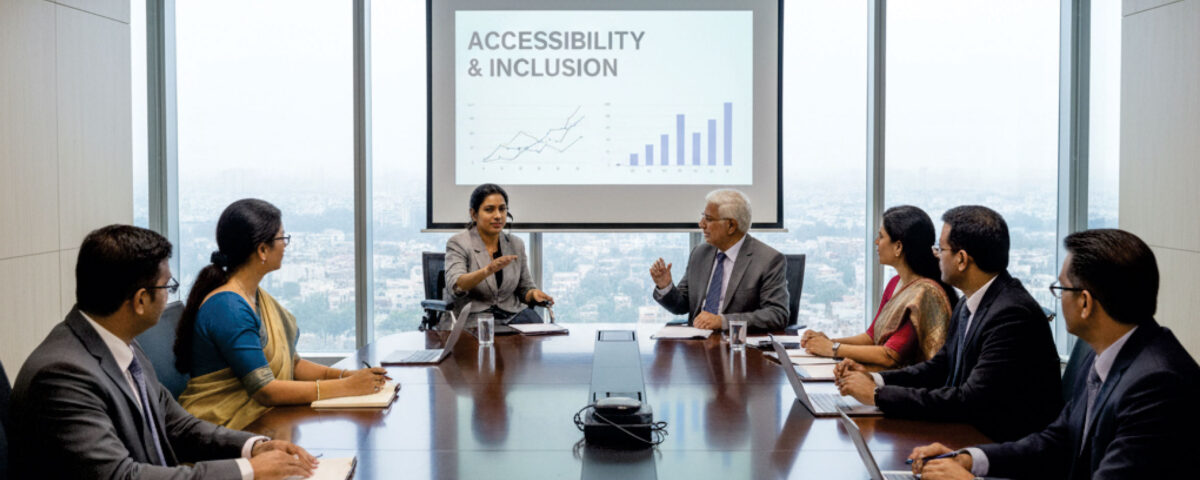
From Exclusion to INNOVATION
Technology’s Role in the Future of Inclusive Employment
~ Mira
WRITER
“I was now more adept on the computer. My power of communication had improved considerably. My one little finger was a power house of strength. I used email all the time. To me, the email and the light writer boosted my confidence.” (P.130, One Little Finger by Malini Chib)

During the early waves of India’s technological revolution, social activist Malini Chib captured a unique perspective in her 2010 autobiography “One Little Finger.” Chib, a social activist and Indian author who has cerebral palsy meticulously typed her entire narrative using one finger, creating both a personal memoir as well as a powerful statement about the accessibility and potential of digital communication. “One Little Finger” offers a compelling account of how technology accessibility intersected with disability during India’s early digital transformation.
In our increasingly digitised world, the technological boom has expanded well beyond traditional computers to encompass groundbreaking developments in Artificial Intelligence and biometric systems. India’s digital revolution has been nothing short of spectacular. With 750 million internet users and Digital India initiatives, India has become a global technology leader. COVID-19 accelerated digital-first governance, moving essential services like vaccine registration and ration distribution online.
Society now grapples with a fundamental paradox: does Technology exacerbate existing disparities between marginalised communities and privileged groups, or does it serve as an empowering tool for individuals like Malini Chib who can harness its potential?
<!-- wp:social-links --><ul class="wp-block-social-links"><!-- wp:social-link {"url":"https://gravatar.com/uniquecreativelyc24b73cbd5","service":"gravatar","rel":"me"} /--></ul><!-- /wp:social-links -->

Conceptualising Disability: Multiple Perspectives
he Medical Model defines ‘disability’ as a pathological deviation from normal bodily systems or functions, with treatment aimed at restoring individuals as close to “normal” as possible. This approach positions trained professionals as disability experts, expecting disabled people to comply with professional recommendations.
Michael Oliver, a pioneering disability theorist, fundamentally challenged traditional medical models by distinguishing between ‘impairment’ and ‘disability’. Oliver described “impairment” as the physical reality of missing or non-functioning body parts. However, he argued that ‘disability’ emerges from social structures rather than individual differences, representing systematic disadvantages when society fails to accommodate physical impairments, barring mainstream participation. Oliver’s definition became foundational to the social model, emphasising that problems lie within ableist social structures, not disabled bodies.
Recent scholarship has developed a historical materialist lens for understanding disability. Capitalism created new forms of exclusion through institutions like prisons, asylums, and hospitals, combining repressive and ideological control while shifting focus from bodily to mental punishments. Within this framework, Finkelstein conceptualises disability as a paradox emerging from interactions between individual impairment and society’s imposed limitations.
Considering these various models, the World Health Organization defines ‘disability’ as emerging from interactions between individuals with health conditions and environmental barriers like negative attitudes, inaccessible infrastructure, and inadequate social support.
The Disability Discourse in the Indian Context
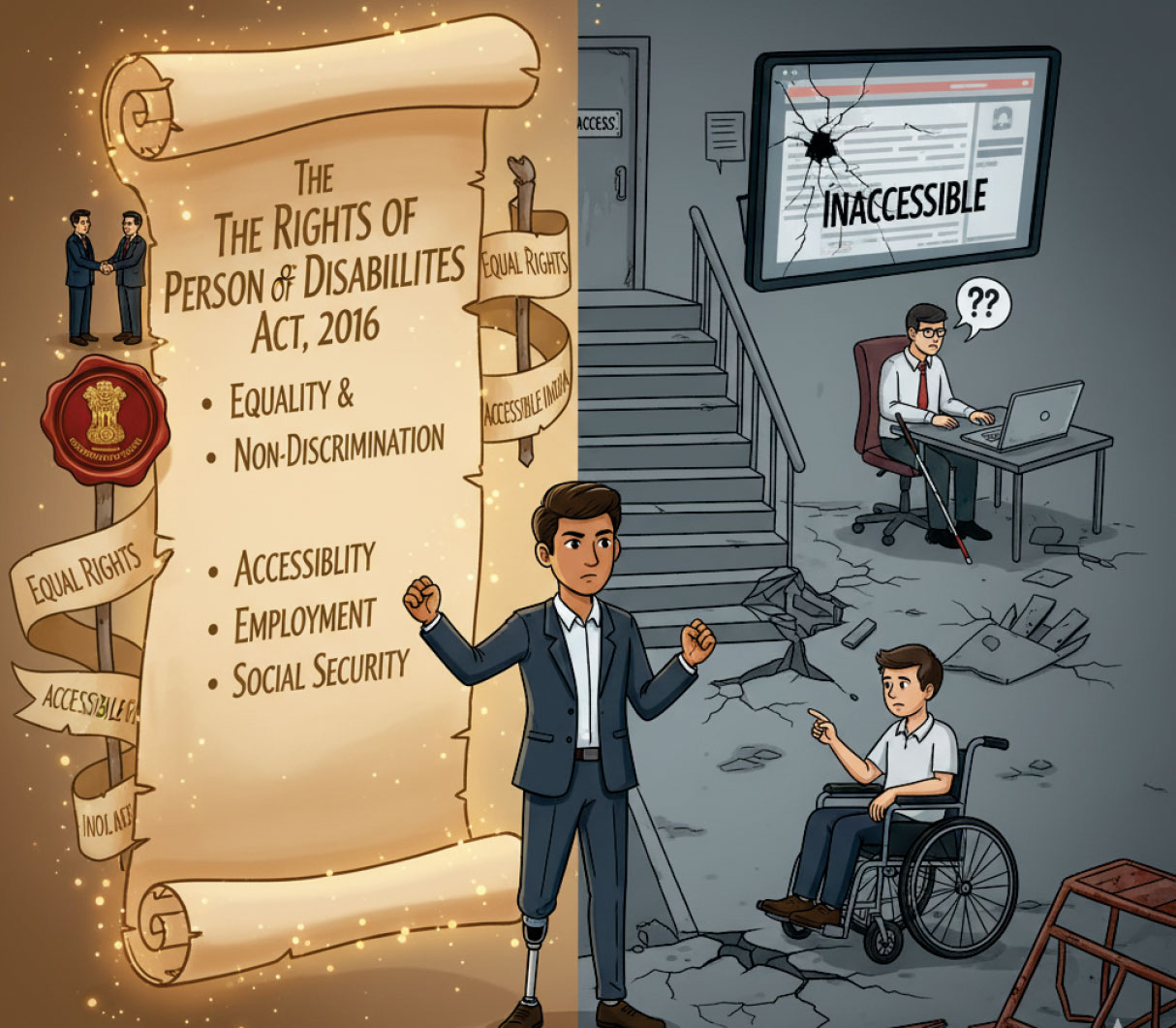
India became one of the first nations to ratify the 2007 UN Convention on Rights of Persons with Disabilities, enacting the comprehensive RPwD Act in 2016 for inclusive society. India’s RPwD Act of 2016 defines a “Person with disability” as someone with long-term impairments hindering full social participation. Covering 21 conditions, both visible (cerebral palsy, blindness) and invisible (multiple sclerosis, thalassemia), the Act requires 40% disability for benefit eligibility, potentially excluding those with lesser but significant impairments from legal protections. India’s Accessible India Campaign (2015) also aimed for universal accessibility in public spaces. However, it faced several delays, merging with other schemes after missing its March 2023 deadline. Nevertheless, Disability Studies has secured its place in educational curricula across state and national institutions. The field is increasingly recognised for its contributions to both literary scholarship and socio-political discourse.
Emerging Opportunities in Tech-Forward Industries
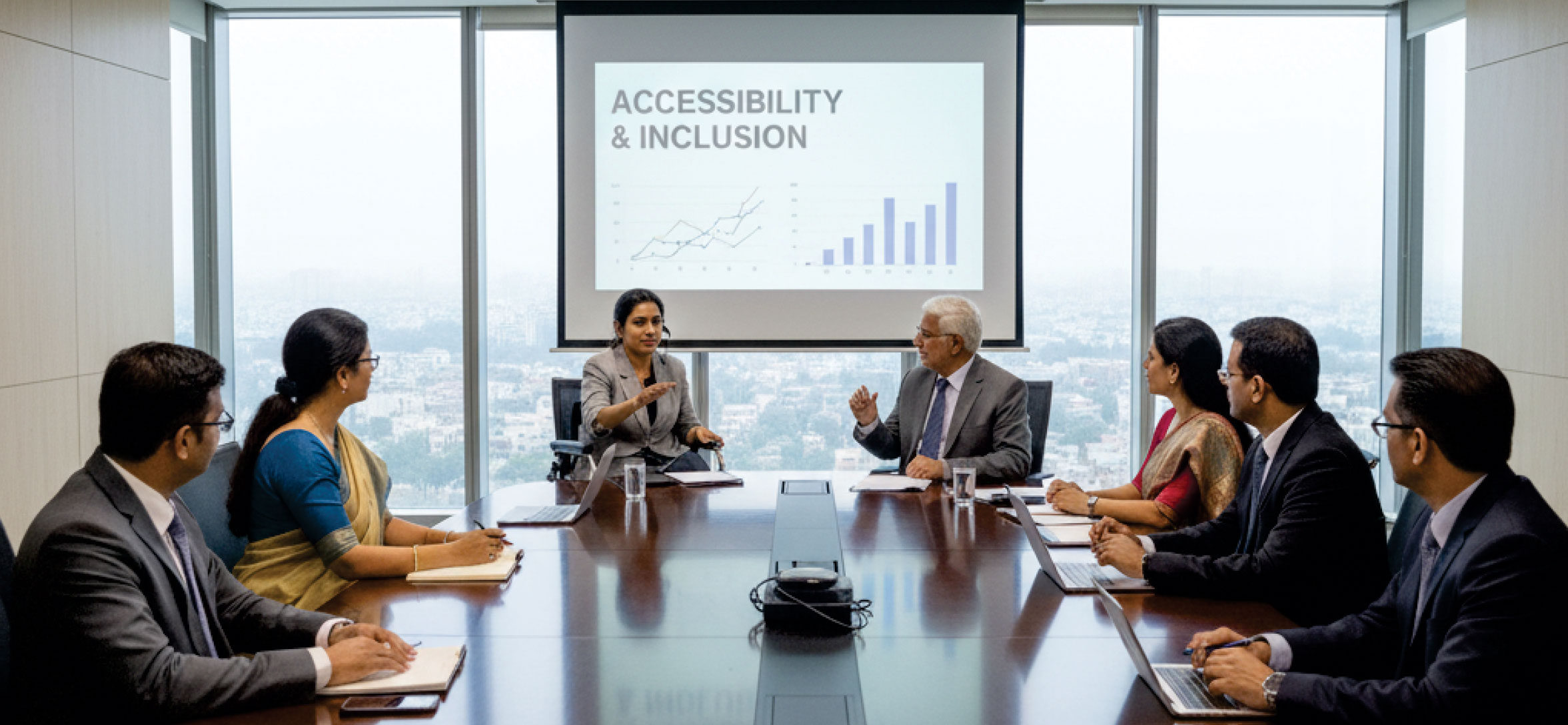
Several sectors are leading the charge in inclusive employment, driven by both technological capability and growing recognition that diversity drives innovation.
Software Development and Tech: The technology sector itself has become a surprising leader in inclusive hiring. Multi-National Corporations or MNCs like Microsoft, Google, and Apple have invested heavily in neurodiversity programs, recognising that different cognitive styles often correlate with exceptional technical skills. Remote pair programming, flexible schedules, and sensory-friendly work environments are becoming standard practice.
Digital Content Creation: The creator economy has opened new avenues for people with disabilities to monetise their skills and perspectives. Platforms for freelance writing, graphic design, video production, and online education allow individuals to build careers around their strengths while working around their challenges. Furthermore, Artificial Intelligence has democratised content creation, enabling individuals to explore creative pursuits and develop new skills regardless of their previous experience or training in those areas. Companies like “Atypical Advantage” have established platforms that amplify the voices and talents of artists with disabilities across disciplines including painting, music, dance, theater, and traditional crafts.
Data Analysis and Research: The increasing demand for data analysis, user experience research, and accessibility consulting has created new professional pathways. Many disabled individuals bring unique insights into user experience and design challenges that their non-disabled colleagues might overlook.
Employment in the Government Sector: India’s government sector offers substantial employment advantages including job security, financial stability, and comprehensive benefits like pensions and healthcare coverage. Through mandatory reservation policies, specific percentages of positions across banking, railways, and public administration are designated for people with disabilities. These roles often include accommodations such as flexible scheduling and accessible workplace infrastructure. While competitive examinations are required, specialised coaching centers and organisations provide targeted preparation support to maximise success rates for disabled candidates.
The Educational Sector: Teaching offers exceptional opportunities for individuals with disabilities, from traditional classroom roles to online education platforms like Udemy, Unacademy, and BYJU’S that enable remote course creation and tutoring. Educators with disabilities bring valuable perspectives on inclusivity and resilience, while e-learning platforms provide mobility-friendly income opportunities through academic content creation and coaching. Special education represents a particularly meaningful path where schools and NGOs actively recruit teachers who understand disability experiences, with specialised training programs available to develop necessary skills.
The Corporate Imperative: Forward-thinking companies are beginning to recognise that inclusive employment isn’t just morally right. It is strategically smart. Research consistently shows that diverse teams outperform homogenous ones, and companies with robust disability inclusion programs report higher innovation rates, better customer satisfaction, and improved financial performance. Technology companies, in particular, are discovering that hiring people with disabilities often means gaining employees who are expert problem-solvers, highly adaptable, and skilled at finding creative solutions to complex challenges, exactly the qualities most valued in innovative industries.
While technology offers tremendous promise, it’s crucial to acknowledge that innovation alone cannot address all the systemic issues that perpetuate employment exclusion. The same A.I. systems that enhance accessibility can also perpetuate discrimination if they’re trained on biased data or designed without inclusive principles. Automated resume screening systems have been shown to discriminate against candidates with employment gaps, which disproportionately affects people with disabilities. Moreover, no amount of technological accommodation can overcome a workplace culture that views disability as a burden rather than a source of valuable perspective and skill. Ultimately, technology remains a transformative catalyst that enables people with disabilities to maximise their talents and seize new opportunities. As disability rights advocate Malini Chib powerfully expressed in her autobiography, "The email technology revolutionised my life. I was able to communicate on my own." Her words capture the profound liberation that thoughtful innovation can bring, not just to individual lives, but to our collective understanding of human potential and workplace possibility.