


Delhi Needs Redevelopment, Not Band-Aid
May 6, 2014
The Legacy of CAPTAIN SAURABH KALIA Kargil’s First War Hero
May 8, 2014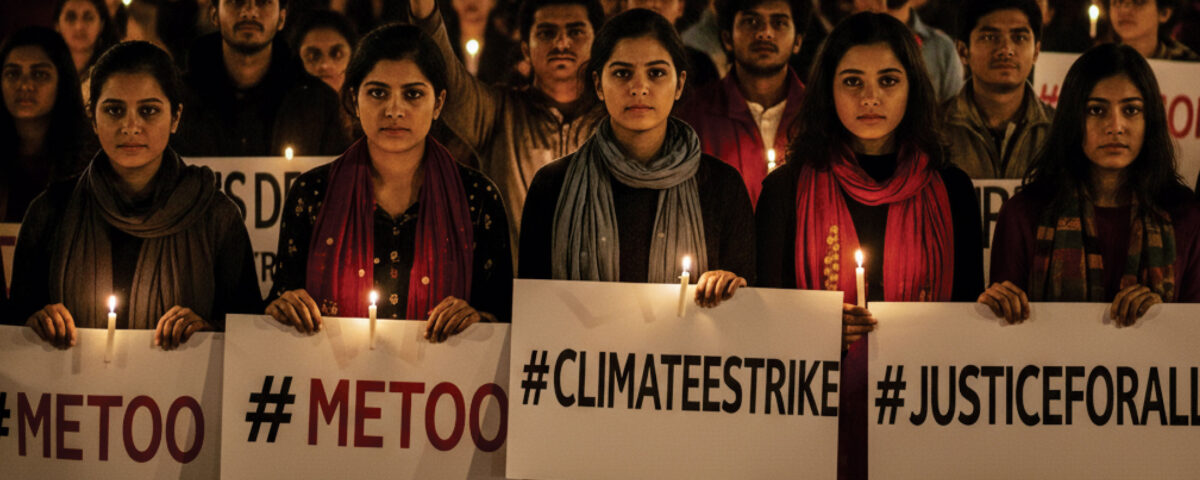
FROM HASHTAGS TO HEADLINES.
HOW YOUTH ARE DEFINING ACTIVISM ONLINE
“The law is not just about complaint mechanisms, but about securing every woman’s right to work with dignity, free from fear” – Kanishka Kashyap
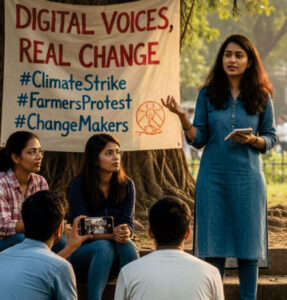
In today’s digital age, a smartphone and an internet connection are enough to spark revolutions. For the youth, social media is not just a space for entertainment or networking; it has become a battleground of ideas, a rallying point for justice, and a megaphone for voices that were once ignored. From climate strikes to movements against corruption, young people are reshaping activism by turning hashtags into powerful campaigns and online conversations into real-world change. According to UNICEF, India has the world’s largest youth population, with 371 million people in the 15 to 29 age group. This fusion of technology and youthful energy has given rise to a new wave of activism—one that is fast, inclusive, and impossible to silence.
- In many countries, youth (18–35 years) form the largest voting bloc.
- Politicians now design campaigns for digital-first voters, using memes, reels, and hashtags to connect.
- Example: In India, 2024 elections saw heavy social media campaigning targeting youth voters.
Hashtag Politics: When Movements Go Viral
Delhi Stray Dog Ruling (2025) –
In August 2025, the Supreme Court initially ordered all stray dogs in Delhi-NCR to be picked up and kept in shelters, citing rising dog bite cases (over 25,000 in 2024). However, after backlash from animal rights groups and widespread online protests—many led by youth—the order was revised. The court allowed sterilised vaccinated dogs to return to their localities, while aggressive or rabid dogs would remain in shelters. Young activists played a key role in amplifying the debate on social media, demanding humane and practical solutions instead of blanket removals. This case highlights how youth-led digital activism can influence even judicial decisions, balancing public safety with ethical animal welfare.
Farmers’ Protest (India, 2020–21) –
Although initiated by farmers, the movement drew remarkable solidarity from the youth. University students, social media influencers, and activists leveraged Instagram and Twitter to spread awareness, share live updates, and counter government narratives. The use of hashtags like #FarmersProtest brought global attention, with youth organizing rallies not just in India but also in the diaspora communities abroad. This digital pressure ultimately compelled the government to repeal the controversial farm laws.
Nirbhaya Protests (India, 2012) –
The horrific Delhi gang rape case shook the conscience of the nation. What began as grief and outrage quickly transformed into one of the largest youth-driven protests India had ever seen. Students and young professionals used Facebook and Twitter to mobilize demonstrations at India Gate and Jantar Mantar, demanding justice and stricter anti-rape laws. The intensity of youth participation pressured the government to amend criminal law, leading to the introduction of more stringent provisions against sexual violence.
#MeToo Movement (2017) –
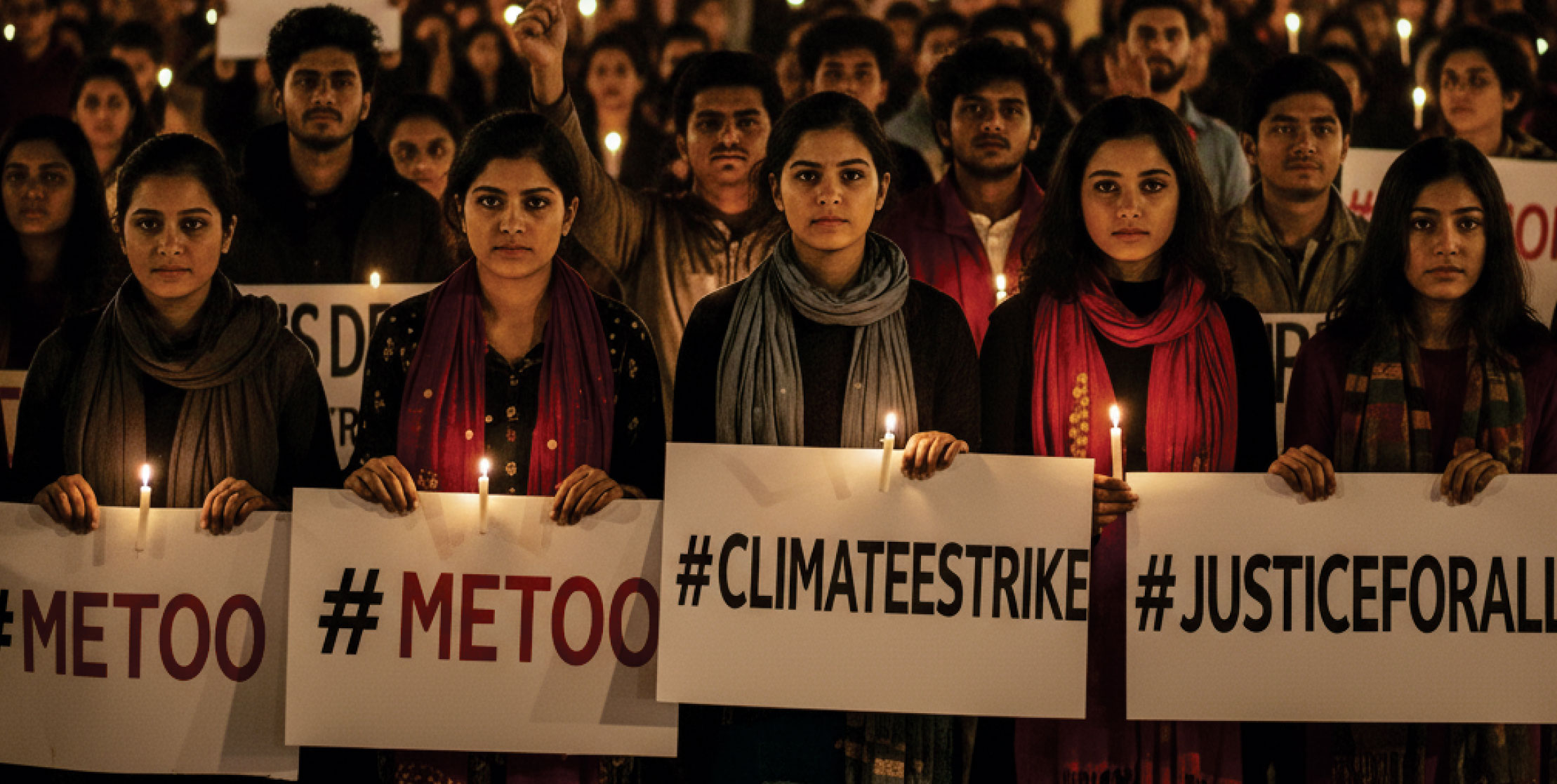
The #MeToo campaign, though rooted in earlier activism, exploded in 2017 when survivors of sexual harassment and assault began sharing their experiences online. Youth and Instagram, created a wave of digital storytelling that forced institutions, corporations, and governments to address gender inequality. In India, this translated into several high-profile cases being exposed, giving women the courage to confront entrenched patriarchy in workplaces, universities, and the entertainment industry.
#BlackLivesMatter (2013, peaked in 2020) –
Originally started after the acquittal of George Zimmerman in the killing of Trayvon Martin, the Black Lives Matter (BLM) movement gained unprecedented momentum in 2020 following the murder of George Floyd. Young activists used Twitter, Instagram, and TikTok to circulate videos, organize protests, and raise funds for legal support. Hashtags like #SayTheirNames and #JusticeForGeorge became rallying cries, pushing conversations on systemic racism to the forefront of global discourse.
#DefundThePolice spread globally, sparking solidarity protests in dozens of countries, including India and Nepal, where youth linked the issue to local struggles against discrimination.
Research indicates that 72% of teenagers use social media, making it a powerful tool for spreading awareness and mobilizing support for causes. By creating compelling content, such as videos and infographics, young activists can capture attention and convey their messages succinctly. From climate strikes of Europe to the streets of Delhi and the recent Gen Z uprising in Nepal, youth have proven that change no longer waits for the future—it is being demanded in the present.
This socio-political consciousness among youngsters encourages civic engagement among them. Young people are digital natives and feel that online media is a natural platform for communication that allows for the massive dissemination of messages that can raise collective awareness and reform the socio-political decisions that benefits the society.
A Catalyst For Transformation In The Contemporary Era
The youth activism plays a crucial role in fostering social change and significantly influenced the process of altering social norms, political discourse, and cultural paradigms. They commonly influence cultural and social change by questioning accepted beliefs and advocating for equality and inclusiveness. By changing artistic ideas and actions, they help create a more progressive and welcoming culture.
These young activists, who are driven by passion, empathy, and a strong commitment to improving the world, have changed the landscape of lobbying and social change. In a multitude of fields, including racial justice, education, social action, and many more, they have successfully achieved their goals by using innovative methods. Their impact on social norms, public opinion, accountability, and policy cannot be disputed. Youth activists have steadfastly pushed for legislative reforms, challenged societal conventions, and held institutions accountable for their actions. They have shown the world that intelligence and effectiveness know no age restrictions.
Future Outlook
Constant exposure to grim realities has primed Gen Zers to deal with hardship proactively. Global data from public-relations and research firm Edelman shows 70% of Gen Zers are involved in a social or political cause. However, this digital landscape also presents challenges, including misinformation, online harassment, and the risk of burnout, necessitating strategies to ensure sustainable activism and mental well-being.
As youth continue to navigate these complexities, their innovative approaches and resilience will be pivotal in shaping a more just and equitable future, ultimately highlighting the transformative potential of digital activism in addressing systemic injustices and creating lasting impact. If nurtured wisely, the activism of today’s youth has the potential to not just influence politics, but to redefine the very meaning of democracy in the 21st century.