

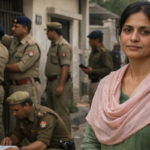
Single Women With Assets Face Harassment
May 10, 2014
Spiritual Tourism in India
May 12, 2014
India is undergoing a profound and largely imperceptible demographic metamorphosis. Advances in healthcare, coupled with increased life expectancy, have engendered a burgeoning elderly populace. Projections from the Ministry of Statistics and Programme Implementation prognosticate that by 2050, the senior citizen demographic—defined as individuals aged 60 and above—will exceed 319 million. Beneath this ostensibly positive development, however, lurks a burgeoning socio-psychological crisis characterized by pervasive loneliness, escalating mental health pathologies, and an alarming surge in dementia and Alzheimer’s disease prevalence, disproportionately afflicting elderly women.
The Veiled Burden of Loneliness
Historically, India’s social fabric has been woven tightly around veneration for elders and the sanctity of familial bonds. Nonetheless, accelerating urbanization, the dissolution of joint family structures into nuclear units, and the relentless cadence of modern life have collectively fostered emotional alienation among the elderly. The oft-quoted aphorism by Mother Teresa — "Loneliness and the feeling of being unwanted is the most terrible poverty" — resonates with profound pertinence within contemporary Indian society.
Loneliness, far transcending mere social inconvenience, constitutes a formidable public health menace. Empirical research elucidates that prolonged social isolation engenders heightened vulnerability to depressive disorders, anxiety spectrum afflictions, immunological deterioration, and premature mortality. In a cultural milieu wherein mental health remains largely stigmatized and unspoken, innumerable elderly individuals endure psychological afflictions in silence, thereby exacerbating their plight.
Mental Health and Cognitive Decline: The Imminent Crisis
The ramifications of chronic loneliness extend deeply into the domain of mental health, precipitating debilitating psychiatric morbidities. Investigations spearheaded by HelpAge India and the National Institute of Mental Health and Neurosciences (NIMHANS) reveal an unsettling escalation in the prevalence of depression, anxiety, and affective disorders among senior citizens, many of which remain clinically unrecognized and therapeutically neglected.
Even more disconcerting is the steady proliferation of dementia-related conditions, foremost among them Alzheimer’s disease—a neurodegenerative malady characterized by progressive cognitive decline, memory impairment, and altered behavior. Present estimations indicate that over five million Indians grapple with dementia, with forecasts anticipating a tripling of this number by 2050.
Alzheimer’s insidiously commences with subtle cognitive lapses—episodic forgetfulness, disorientation, and difficulty performing quotidian tasks—which families frequently misconstrue as normative senescence, thereby deferring timely diagnosis and intervention. Dr. K.S. Shaji, an eminent geriatric psychiatrist, cogently articulates, "Old age is not a disease, but Alzheimer’s is. It deserves the same urgency as any other illness."
Disproportionate Vulnerabilities of Elderly Women
Among India’s elderly cohort, women emerge as particularly susceptible to multifarious adversities, both psychological and somatic.
- Longevity and Widowhood: Women’s statistically greater longevity often consigns them to protracted periods of widowhood, a status still stigmatized within traditional social milieus, precipitating marginalization and profound isolation.
- Economic and Social Dependency: Historically excluded from formal employment sectors, many elderly women remain financially reliant on their offspring or extended kin, rendering them vulnerable to neglect, emotional abuse, and exploitation.
- Educational Deficits and the Digital Divide: Illiteracy or semi-literacy is widespread among elderly women, particularly in rural regions, impeding their ability to navigate contemporary communication technologies and exacerbating their social exclusion.
- Mental Health Suppression: Societal conditioning inculcates in women the tendency to repress emotional distress, culminating in unarticulated psychological suffering during advanced age.
Meenakshi Devi, a septuagenarian widow residing in Varanasi, encapsulates this existential predicament: "I’m alive, but I don’t feel seen. They care for me, but no one really listens."
Notably, Alzheimer’s disease disproportionately affects women due to both biological predispositions and longevity. Moreover, cognitive decline tends to progress more precipitously in women once the disease manifests.
COVID-19: An Aggravating Catalyst
The COVID-19 pandemic exacerbated the existing vulnerabilities of senior citizens. Prolonged lockdowns, pervasive fear of contagion, and curtailed healthcare access engendered heightened psychological distress. The consequent diminution of familial contact and social interaction accelerated the deterioration of mental health and hastened the progression of dementia symptoms in susceptible individuals.
Towards a Comprehensive and Compassionate Response
Mitigating these interwoven challenges necessitates a multifaceted, interdisciplinary strategy engaging familial units, community structures, healthcare systems, and policy frameworks.
- Familial Engagement and Reverence:
Encourage quotidian communication with elderly kin, incorporating them in familial decision-making and ceremonial occasions. Sensitize caregivers to early indicators of Alzheimer’s and mental health disturbances. - Community Mobilization:
Establish senior citizen clubs and wellness centers that facilitate social, recreational, and therapeutic engagement. Develop women-specific support networks that provide safe emotional sanctuaries. - Healthcare Accessibility and Dementia-Specific Care:
Train primary healthcare providers to recognize geriatric mental health disorders and early dementia signs. Establish dedicated memory clinics and geriatric psychiatric facilities, prioritizing underserved regions. Provision subsidized pharmacotherapy and psychotherapy under state-sponsored schemes. - Alzheimer’s Awareness and Education Campaigns:
Launch expansive public education initiatives aimed at demystifying dementia, promoting early diagnosis, and fostering compassionate caregiving. - Digital Literacy and Technological Inclusion:
Implement training programs empowering seniors to utilize digital communication tools, facilitating familial connectivity and telemedicine. Distribute affordable, senior-friendly technological devices to bridge the digital divide. - Policy Strengthening and Legislative Enforcement:
Enforce the Maintenance and Welfare of Parents and Senior Citizens Act rigorously. Expand widow pension schemes and community-based home care services. Integrate dementia care modules within national health programs such as Ayushman Bharat.
Conclusion
The confluence of loneliness, mental health disorders, and Alzheimer’s disease within India’s aging populace—most acutely among elderly women—constitutes an urgent public health and ethical imperative. Addressing these complex phenomena transcends biomedical intervention, demanding a profound cultural renaissance imbued with empathy and social responsibility.
As Mahatma Gandhi profoundly stated, "The true measure of any society can be found in how it treats its most vulnerable members." In the epoch of India’s rapid economic and technological ascendance, it is incumbent upon society to evolve its social consciousness, ensuring that its elders traverse the twilight years with dignity, purpose, and compassion.
The architects of our nation’s present and future merit not neglect but reverence and support; it is our collective duty to uplift them from obscurity to recognition