


STRENGTH IN SERVICE
April 30, 2014
Managing Stress Through Spiritual Counselling
May 2, 2014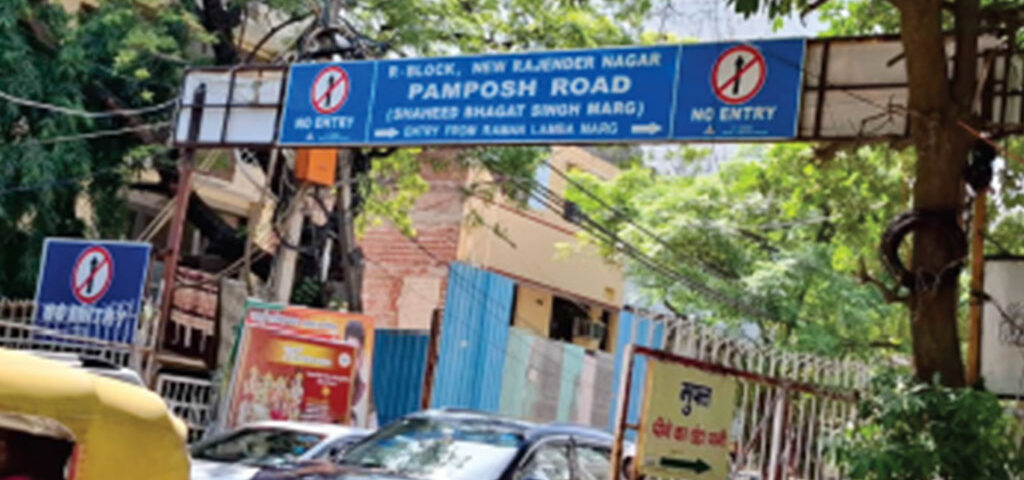
AFFLUENT ADDRESSES, EVERY DAY STRUGGLES
For years, New Rajinder Nagar was known by its tag of exclusivity – tree-lined avenues, manicured lawns, gleaming high rises and a promise of comfort that only a posh locality could offer. It symbolised success, security, and an enviable lifestyle. But behind the polished facades and gated compounds, cracks are beginning to show. Today, the very area once celebrated for its serenity and convenience is grappling with a range of issues – rising traffic congestion, encroachments, unchecked construction, mounting waste and growing civic apathy.
Residents once content with their status address, now voice concerns and echo those from less privileged corners of the city. Overflowing drains, erratic water supply and security lapses have crept into daily life.
This contradiction – where affluence co-exists with basic urban distress – raises difficult questions about city planning and governance. Does the privilege of the posh address merely an illusion in an overburdened metropolis? As residents push back, form associations and demand accountability, this neighbourhood stands at a crossroads, redefining what it means to live in a premium locality.
The residents share their daily concerns through various Whatsapp groups formed along with the RWA. There is also an MLA connect group which is an official group formed by the team of MLAs like Umang Bajaj and Councillor Arti Chawla.
Shashi Mehta
Member, Joint Forum
Shashi Mehta, member of Joint Forum RWA New Rajinder Nagar, states –
“Nothing has been done from the last ten years. Roads were constructed during the Sheila Dixit tenure, nothing after that. Apart from bad roads, encroachments on pavements, there are security concerns. Chain snatching incidents have been reported, and parks are being used by gamblers… very less patrolling from the local police. There is nothing for senior citizens or women like a small club or a cafe where they can connect.”
Sangeeta Vij, another resident since 1985 raises concern about the encroachments. She says- "Once I used to go for walks but now there are selling carts that have totally taken over the pavements. I dread moving out as I might get hurt by a speeding car. "
Bad roads, pot holes, are further messed up during rains. The pavement outside the Andh Kanya Vidhalaya and Nehru Park have been totally encroached upon leaving no place for the residents to walk around. The weekly Thursday market, too, creates a huge traffic jam and also has been a security threat for the residents as incidents of chain and purse snatching have been reported.
Anuj Chowdhry, born and brought up in New Rajinder Nagar, wants multiple forums to unite and work together. The last Government did nothing "their focus was more on clusters. They listened to us but did nothing. The water we get from DJB is not fit for human consumption. " He adds.
When Luxury Meets Scarcity: Posh Locality Struggle for Water
Residents of New Rajinder Nagar are today grappling with an issue more common to neglected corners of the city—acute water shortage. For weeks, taps have run dry for long hours, forcing families to depend on private tankers and packaged water. Ironically, even as they pay high property taxes and hefty maintenance charges, they find themselves queuing up with buckets, waiting for emergency supplies. What was once dismissed as a “temporary glitch” has become a chronic civic failure.
Residents complain of broken pipelines, erratic supply schedules, and a lack of accountability from civic authorities. The water issue has hit the senior citizens and the people living alone the most.
When Luxury Meets Scarcity: Posh Locality Struggle for Water
Residents of New Rajinder Nagar are today grappling with an issue more common to neglected corners of the city—acute water shortage. For weeks, taps have run dry for long hours, forcing families to depend on private tankers and packaged water. Ironically, even as they pay high property taxes and hefty maintenance charges, they find themselves queuing up with buckets, waiting for emergency supplies. What was once dismissed as a “temporary glitch” has become a chronic civic failure.
Residents complain of broken pipelines, erratic supply schedules, and a lack of accountability from civic authorities. The water issue has hit the senior citizens and the people living alone the most.
Arvind Mehta
President, Joint Forum of Residents, NRN
Arvind Mehta, President of the Joint Forum RWA New Rajinder Nagar, speaks about New Rajinder Nagar –
“It was once a crown in the jewel but today it’s shameful to see the pathetic condition of the roads, dirty, muddy water or no water, poor infrastructure, with safety concerns.”
Lorem ipsum dolor sit amet, consectetur adipiscing elit, sed do eiusmod tempor incididunt ut labore et dolore magna aliqua. Ut enim ad minim veniam, quis nostrud exercitation ullamco laboris nisi ut aliquip ex ea commodo consequat. Duis aute irure dolor in reprehenderit in voluptate velit esse cillum dolore eu fugiat nulla pariatur. Excepteur sint occaecat cupidatat non proident, sunt in culpa qui officia deserunt mollit anim id est laborum.
The crisis has revealed a hard truth: civic negligence knows no boundaries of wealth or status. Unless urgent solutions are put in place, even the city’s most privileged addresses will remain parched.
Sukh Sagar Sahni
Vice President Joint Forum
Sukh Sagar Sahni, Vice President Joint Forum, RWA New Rajinder Nagar shared his ordeal –
“Nothing is happening at the ground level. Slums are getting water twice a day and we living in a posh area get water once a day and sometimes not even that also. It is not just less or no water, rather, we are getting muddy, smelly water as if sewerage water is mixed with it.”
“My Aquaguard is fully choked,” he further adds.
Parveen Chopra, a senior citizen, had undergone a knee-replacement surgery a few months back and still walks with the help of a stick –
“Every morning water comes at 4.30 and I have to climb despite my surgery to check if the pressure is proper or if the water is clean or not. Is it possible for me to climb and check my water tank every day?”
“For how long can we buy bottled water? My school-going kids cannot even take a proper bath, leave aside getting water for household chores,” adds Preety Patney, a mother of school-going kids. The condition is worse during summers as the consumption of water increases.
Dinesh Malik, also a senior citizen, adds,
“Water pipes are too old and most of them are mixed with sewerage lines. Hence, dirty water is what the residents get.”
One common complaint residents have is that helpline numbers provided by the team of MLA Umang Bajaj remain unanswered or switched off. Some residents have developed skin rashes due to dirty water, others have stomach infections.
In February 2025, the Joint Forum RWA New Rajinder Nagar handed over a twenty-five points charter to MP Bansuri Swaraj, MLA Umang Bajaj and Councillor Dr. Arti Chawla. The key issues mentioned were quality and availability of water, roads, and safety. There are dark spots and CCTV cameras are required to ensure safety of the residents.
“They have never visited after that. It’s just vote politics,” adds Mehta, President, Joint Forum. The joint Forum has been working on this issue and has even met the concerned Ministers.

Jatin Midha,
General Secretary, Joint Forum, RWA, New Rajinder Nagar.
Jatin Midha, the General Secretary of the Joint Forum RWA New Rajinder Nagar, shares- "Rajinder Nagar has to depend on two water reservoirs - Bhuli Bhatiyari (built in 1939) and R-Block Ridge Road. Despite permission by the Court and NGT to build the second reservoir, there has been no progress. We met CM Rekha Gupta, Minister Parvesh Verma and the MLA Umnag Bajaj, but nothing worked".
Another area that needs urgent attention is garbage mismanagement. The problem is not of affordability or resources. The van collecting the garbage is irregular. The absence of an efficient waste collection and disposal system has turned into a daily embarrassment.
“It feels ironic that we live in an area associated with status and comfort, but every morning we are greeted with heaps of uncollected garbage,” laments Sweety Anand.
Civic authorities blame logistical challenges—narrow lanes, irregular segregation of waste, and delays in transporting garbage to dumping grounds. Residents, however, argue that these are mere excuses and reflect a deeper problem of mismanagement and lack of accountability.
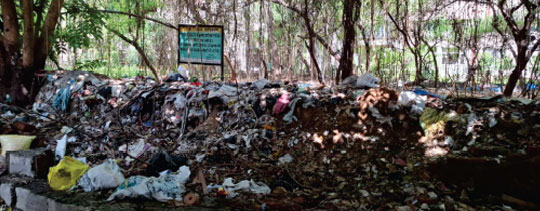
The back lane of Pamposh Road has become a dumping ground. Not only do heaps of garbage put a health hazard but also pose a safety threat for the residents as the back lane has become a safe haven for rag-pickers and drug addicts. Instead of converting the back lane into a park that can be used by the residents, the authorities remain oblivious to it.
The parks, too, are full of horticulture waste that stinks during rains. On one hand, fogging continues to prevent dengue and on the other hand, the breeding ground of the mosquitoes is totally ignored. The back lanes of all the blocks have the same fate.
No Library in a Posh Area: A Silent Gap in Community Life
In a city where malls, cafes, and luxury apartments dominate the landscape, it is surprising to find that a well-developed, upscale area has no public library. Despite being home to highly educated professionals, entrepreneurs, and young students, residents of this posh neighbourhood are left without an essential cultural and intellectual hub.
Libraries are more than just book-lending spaces; they are knowledge centres that nurture curiosity, promote reading habits, and provide access to information for all age groups. For children, a library creates an environment that encourages learning beyond classrooms. For senior citizens, it offers companionship through community activities, reading circles, and lifelong learning opportunities. Even professionals benefit from access to updated research, periodicals, and quiet study spaces.
Ironically, while the locality boasts of good public schools, fitness clubs, the absence of a library reflects misplaced urban priorities. A neighbourhood of privilege should ideally set higher benchmarks for community development, but here, intellectual growth has taken a back seat to consumerism.
Community Centre Lies Unused
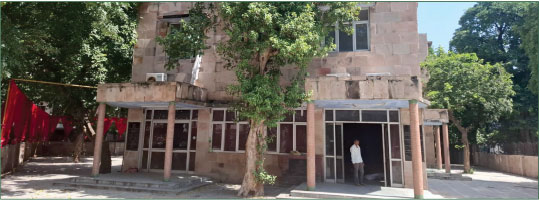
The community centre-built years ago with much fanfare-now stands as a silent, underutilised structure. Despite its spacious halls, and potential to serve as a hub for residents, the centre lies largely neglected, hosting only the occasional private event or seasonal gathering.
The irony is striking: this locality has every possible luxury, from premium gyms to designer cafes, yet lacks a functioning public space where residents can truly come together. A community centre is meant to be the heart of social and cultural life-organising workshops, fitness programs, Art exhibitions, children's activities, and senior citizen meetups. Instead, locked doors and empty rooms have turned it into a symbol of poor planning and community indifference.
Residents often voice their disappointment, pointing out that the centre could easily host educational classes, health camps, or cultural evenings, especially in an era when meaningful social connections are dwindling. Senior citizens who yearn for a space to interact, youngsters who seek recreational outlets and children who are looking for after-school activities all lose out because the centre has not been activated to its full potential.
The neglect also reflects a lack of coordination between civic authorities and Resident Welfare Associations. While the infrastructure exists, there is no clear management plan, funding support, or community initiative to bring it to life. If revived with vision, the community centre could transform into a vibrant hub--strengthening social ties, fostering creativity, and offering inclusive opportunities for all age groups. Instead of being a forgotten building in a posh area, it could become the very soul of the neighbourhood.

Ajay Bajaj
President, RWA, New Rajinder Nagar. .
Ajay Bajaj, President of R-Block RWA initiated a move with other residents to ensure a safe environment for the residents. Residents contribute a thousand rupees a month to pay to the security guards that are appointed by them. They have also opted for a gated locality and each guard is made to note down the car number and the address of the resident coming late at night. Not only do the members of the RWA have daily night duties to check on the guards but they also ensure that they are present at the site. Joint Forum, too, bas worked towards a gated locality while also having security guards at prominent entries.
Ironically, this locality has some of the city's costliest real estate, but it continues to struggle with basic issues of safety. In some areas, poorly lit streets and unmonitored back lanes make residents vulnerable at night. The abandoned homes, too, are targets of the robbers. Many vacant properties have been looted as the back lanes are dark and have been without patrolling.
For genuine progress, both authorities and citizens must work together. While the administration must prioritise sustainable planning and efficient services, residents, too, must step forward to demand accountability and revive community spirit. The posh area is not defined by its real estate value, but by how safe, inclusive and responsive it is to the everyday needs of its people.
Bhawna Malik is the Editor-in-Chief of "Janta Unmuted" and "The Unheard Voice", a YouTube channel. She writes regularly for 'The Raisina Hills.com' on social and political issues. She is a Gold Medallist in M.A. Religious Studies and has also presented research papers at National and International Seminars. She was also a former student counsellor at Mata Sundri College, Delhi University.
